
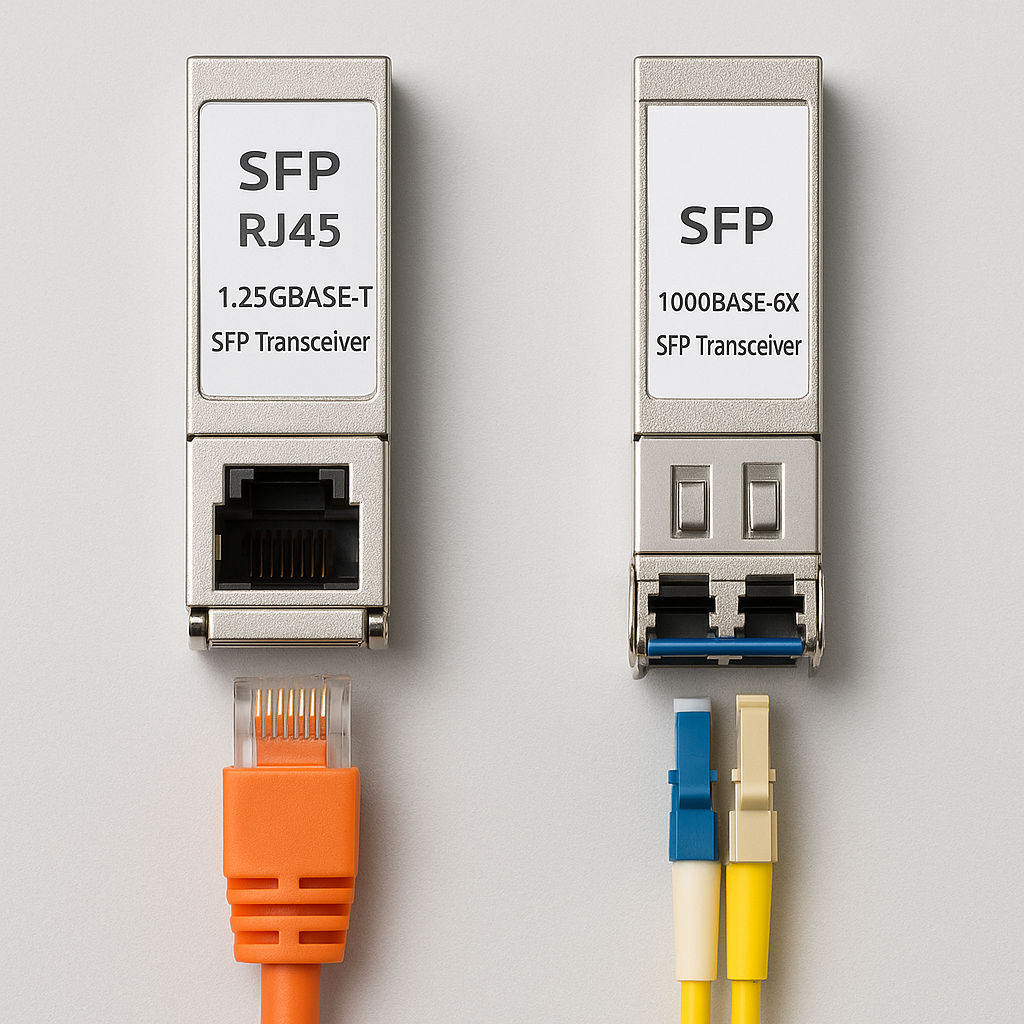
When working with modern networking equipment, you’ll often come across the term SFP port on switches. Whether you’re setting up a small business network, expanding your infrastructure, or simply learning how switches work, understanding SFP ports is essential. In this guide, we’ll break down what an SFP port is, how it works, and why it’s so valuable in network design.
What Is an SFP Port?
An SFP port (Small Form-factor Pluggable port) is a compact, hot-swappable interface used in network switches, routers, firewalls, and servers. Instead of having a fixed Ethernet or fiber connector, these ports allow you to insert SFP modules that determine the type of network connection you want to use.
In simple words:
An SFP port is like a universal slot on your switch that accepts different modules to support either copper or fiber connectivity.
How an SFP Port Works
SFP ports rely on SFP transceiver modules, which act as adapters. Here’s how the process works:
1. Insert the SFP Module
You plug an SFP module into the SFP port. The module can be fiber optic, copper (RJ45), long-range, short-range, 1G, 10G, or higher depending on the type. The best part is that these modules are hot-swappable, so you don’t need to power off the switch when adding or changing them.
2. Signal Conversion
Depending on the module type:
- Fiber SFP modules convert electrical signals into light signals and then back into electrical signals.
- Copper SFP modules adapt electrical signals directly for copper Ethernet ports.
3. Connect Your Cable
Attach the matching cable to the module:
- LC fiber cable for fiber SFP modules
- RJ45 Ethernet cable for copper SFP modules
4. The Switch Negotiates the Speed
Once connected, the switch communicates using the speed the module supports—typically 1Gbps for SFP, 10Gbps for SFP+, and higher for advanced versions.
Why Are SFP Ports Important?
SFP ports offer several major advantages:
✔ Flexibility
You can use the same switch with different module types for:
- Short-distance links
- Long-distance fiber
- Copper or fiber connections
- Different speeds (1G, 10G, etc.)
✔ Long-Distance Connectivity
Fiber SFP modules can support:
- Hundreds of meters (multi-mode fiber)
- Up to 10 km or more (single-mode fiber)
This makes them perfect for connecting offices, buildings, or network rooms.
✔ Better Performance
Fiber-based SFP connections offer:
- Low latency
- Strong resistance to electromagnetic interference
- High stability for long-distance communication
✔ Perfect for Uplinks
SFP ports are commonly used to link:
- Switch to switch
- Switch to router
- Firewalls
- Servers
This improves network efficiency and allows for easy scaling.
Types of SFP Modules
Here are the most commonly used SFP module types:
| SFP Type | Medium | Distance | Description |
|---|---|---|---|
| SFP RJ45 | Copper | Up to 100m | 1Gbps Ethernet over copper |
| SFP-SX | Multi-mode fiber | Up to 550m | Short-range fiber module |
| SFP-LX/LH | Single-mode fiber | Up to 10km | LH – Short to medium range upto 10KM LX – Long-range fiber module |
| SFP+ | Fiber or copper | Up to 10Gbps | High-speed uplink module |
| BiDi SFP | Fiber | 10–20km | Uses one fiber strand for send/receive |
SFP vs SFP+ — What’s the Difference?
| Feature | SFP | SFP+ |
|---|---|---|
| Speed | Up to 1Gbps | Up to 10Gbps |
| Cost | Lower | Higher |
| Use Case | Standard uplinks, short/long fiber | High-speed networking, data centers |
If your network needs more than 1Gbps, SFP+ is the better choice.
When Should You Use an SFP Port?
You should consider using an SFP port when:
- You need long-distance connectivity
- You want the reliability of fiber
- You’re building a scalable, flexible network
- You require high-speed uplinks
- You want the option to upgrade later without changing the entire switch
Conclusion
SFP ports bring flexibility, performance, and scalability to modern network switches. They allow seamless switching between copper and fiber, support long-distance communication, and deliver high-speed connections when needed. Whether you’re managing a small office or designing a multi-building setup, SFP ports help keep your network fast, reliable, and future-proof.